
Organisations rarely struggle because they lack spatial data. The harder problem is turning that data into information that different people can actually understand and use.
As more datasets, maps and applications are introduced, another challenge appears: keeping everything accessible without making the GIS environment increasingly difficult to manage. GeoApps addresses both sides of that problem by combining specialised web applications, dashboards and management tools within one broader platform.
Some of these capabilities took an important step forward with GeoApps V29 in 2023. Since then, the platform has continued to evolve, but the underlying goal remains the same: make spatial information easier to turn into practical insight across the organisation.
Data has little value if only GIS specialists can understand it
GIS teams often work with complex datasets that contain valuable information for policy teams, project managers, field staff and decision-makers. However, those users do not always need access to the full technical GIS environment to answer their questions.
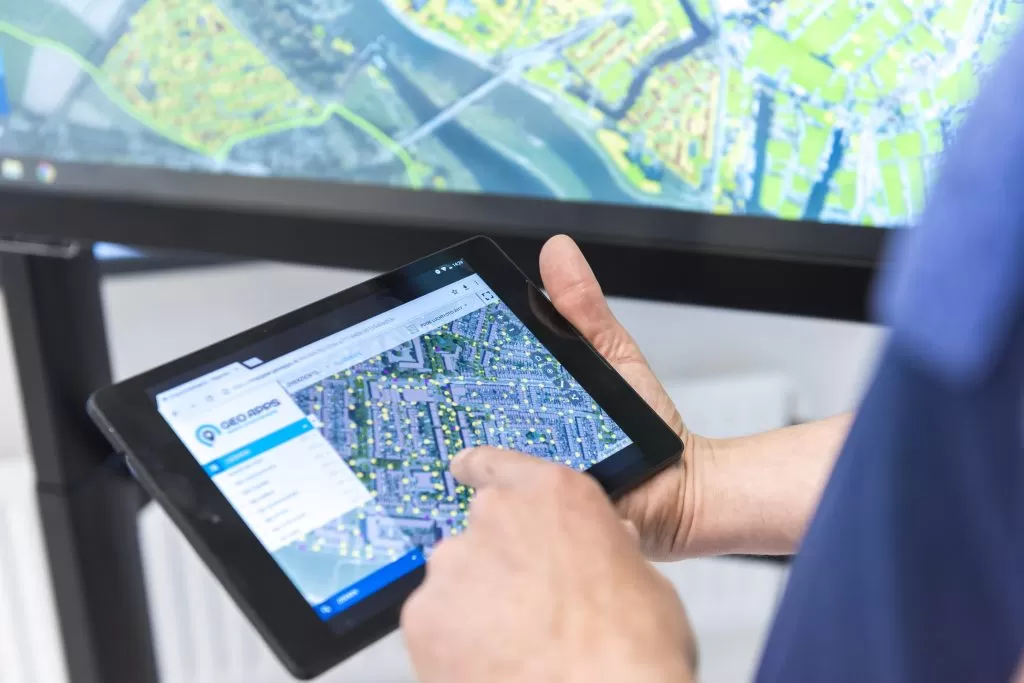
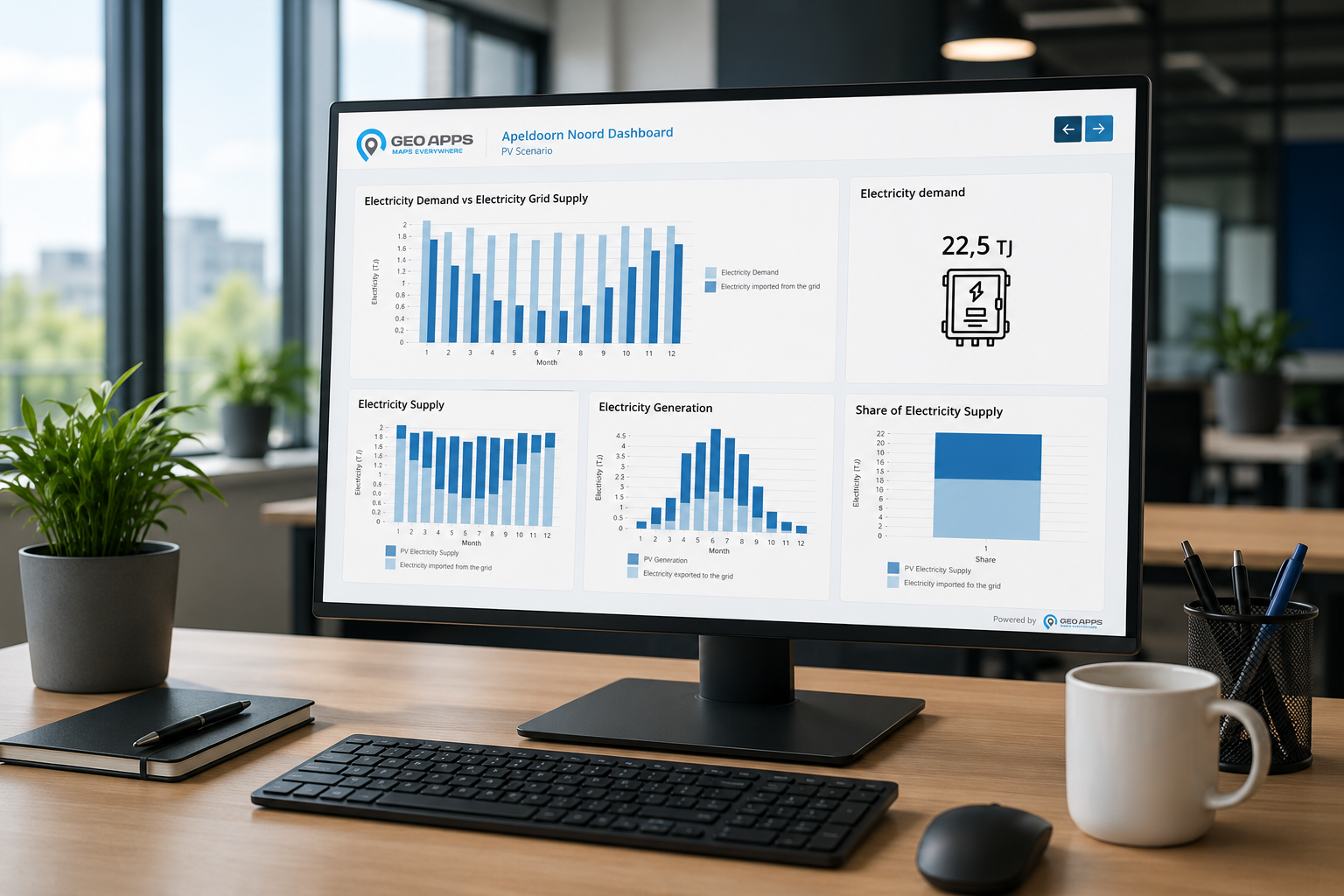
GeoApps Dashboard helps translate spatial information into a more accessible combination of maps, charts, indicators and other visualisations. As a result, users can view geographic patterns alongside relevant metrics instead of interpreting separate datasets or switching between multiple tools.
Moreover, dashboards can bring information from different sources into one view. This makes them useful for monitoring projects, communicating developments and giving teams a shared picture of what is happening across an area.
More applications should not automatically mean more management
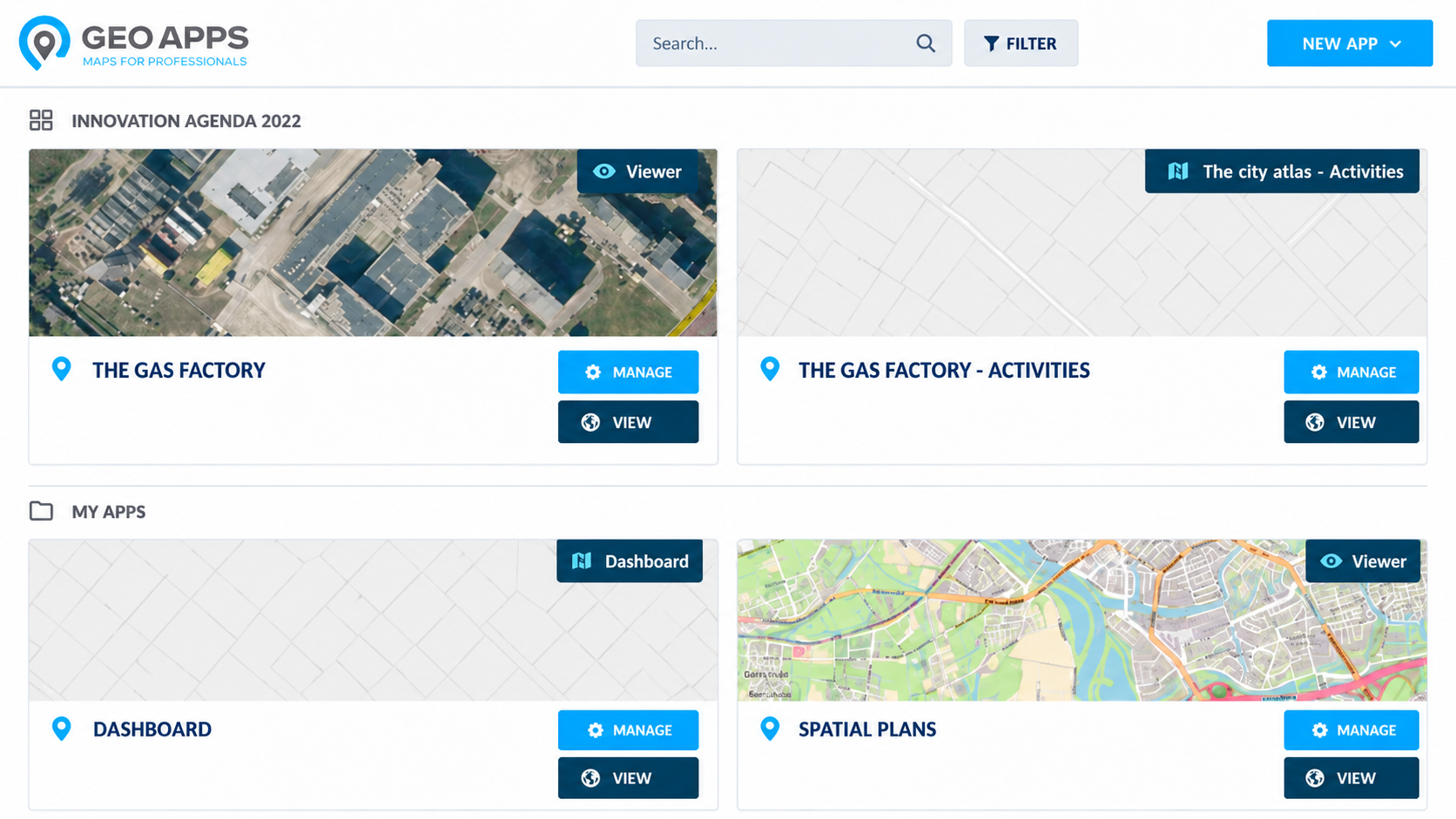
As an organisation creates more viewers, dashboards and project applications, structure becomes increasingly important. Without clear management, users may struggle to find the right application while administrators spend more time maintaining separate configurations.
GeoApps brings different applications together within the same platform environment. Administrators can organise applications around specific workflows and audiences, while users can access the tools that are relevant to their work.
Consequently, GIS management becomes less about maintaining isolated map products and more about building a structured environment in which applications, data and users can work together.
Not every user needs the same GIS experience
A policy adviser reviewing an indicator, a field worker registering an asset and a GIS specialist analysing spatial data have very different needs. Giving all three the same interface can create unnecessary complexity.
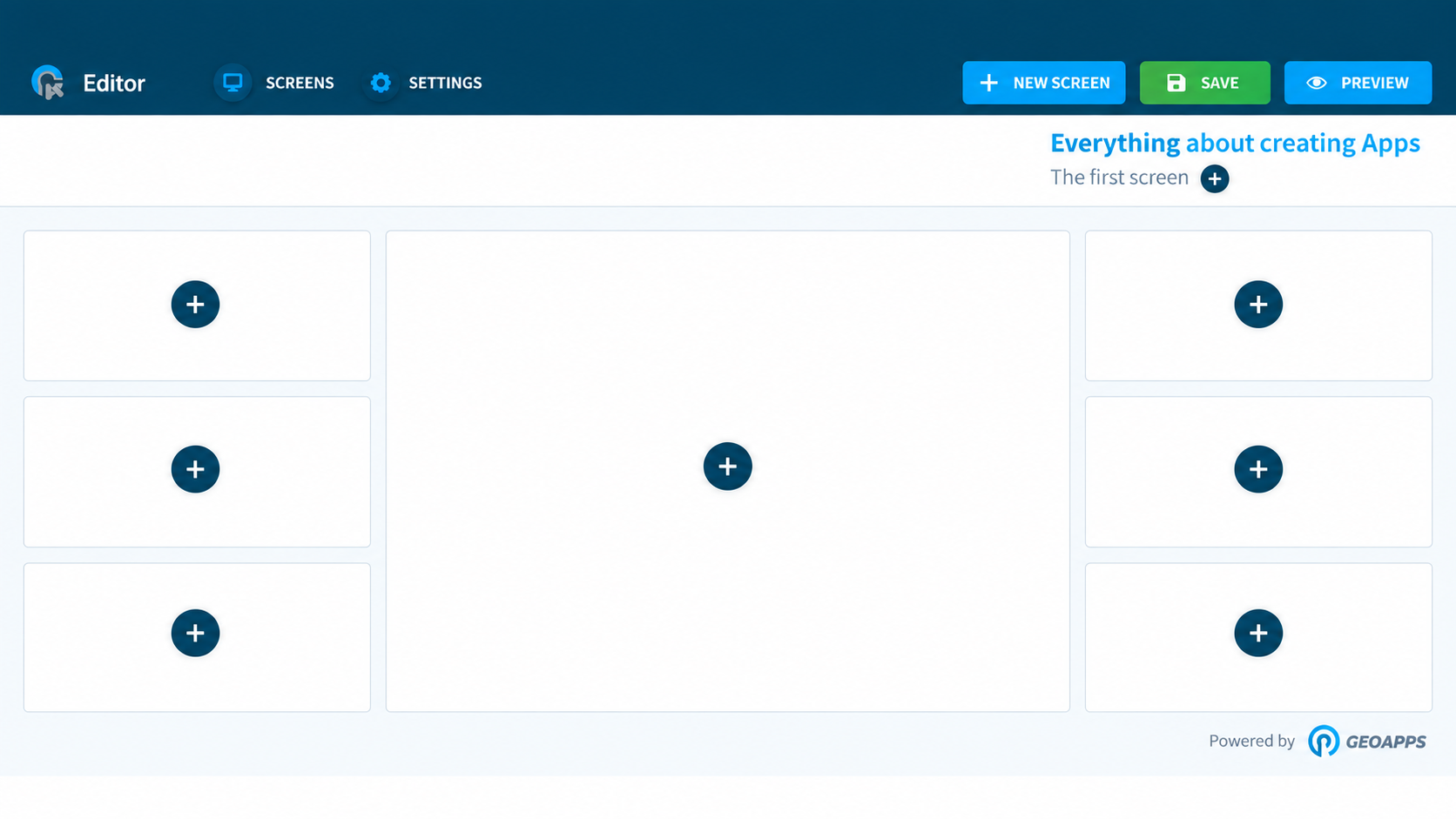
GeoApps therefore uses specialised applications for different types of work. Viewer supports interactive map exploration, Dashboard focuses on visualisation and analysis, Fieldwork supports mobile data collection, while MapTour and MapTalk help organisations communicate spatial information and involve wider audiences.
In practice, this allows the GIS environment to become more accessible without removing the specialist tools GIS professionals still need. Users work with an application designed around the task instead of navigating functionality that is irrelevant to them.
Your GIS should grow with the workflow, not force every workflow into the same tool
Standard applications cover many common needs, but organisations also have processes that require something more specific. Therefore, GeoApps also supports custom applications and integrations alongside its standard app environment.
This makes it possible to connect spatial data with organisation-specific workflows rather than forcing every process into one generic application. At the same time, integrations with desktop GIS, databases, services and other systems allow GeoApps to become part of a broader GIS architecture instead of replacing everything around it.
The evolution that began with releases such as V29 therefore represents something larger than a list of new features. It reflects a move towards a GIS environment where data, applications and users are connected around the work they actually need to do.
For organisations, that means the value of GIS no longer stops at displaying a map. The platform can help turn spatial data into dashboards, field workflows, project applications and information products that support decisions throughout the organisation.
Want to see how GeoApps can bring your spatial data, applications and workflows together?