Oblique Imagery
Oblique imagery (oblique aerial photos) captures the ground and buildings at an angle, usually around 45°, rather than straight down (nadir). Facades, roof edges, yard boundaries, and objects poorly visible from above - sheds, canopies, fencing - are much easier to assess than on an orthophoto.
In GIS and registry projects oblique imagery supports BGT, BAG, and WOZ work: confirming facades, extensions, backyard objects, and details missing on PDOK orthophotos. Images are geo-referenced with position and viewing direction on the map so viewers jump straight to the right object.
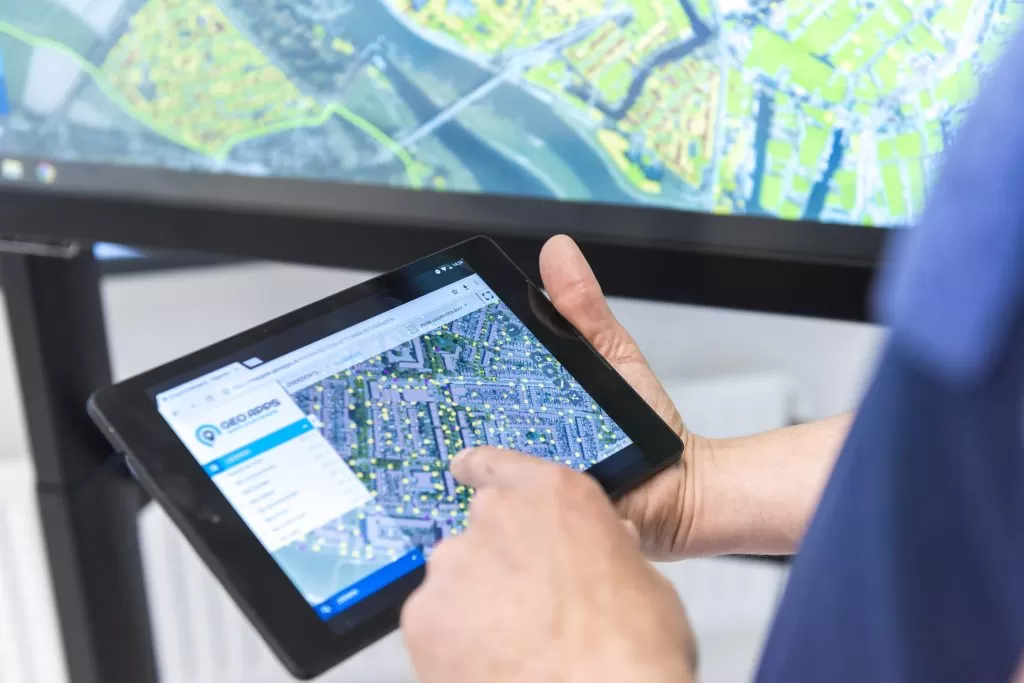
In GeoApps, oblique imagery is often offered from four compass directions (north, east, south, west), similar to street imagery but from the air. Integrations with providers such as Slagboom & Peeters or Kavel 10 link historical and current oblique series to BGT, BRT, and internal layers. The map shows where you are looking and in which direction while inspecting without an extra site visit.
Oblique imagery is not an orthophoto: scale and geometry are not meant as a measurable map backdrop across the whole image. It is not street-level imagery (Street View) or an uncorrected satellite composite. It is raster data with high interpretive value for inspection and object recognition - complementary to orthophoto, vector data, and fieldwork.
From theory to practice: GeoApps offers user-friendly GIS solutions to get you started right away. Discover how our apps and platforms help you visualize, analyze, and share geographic data.
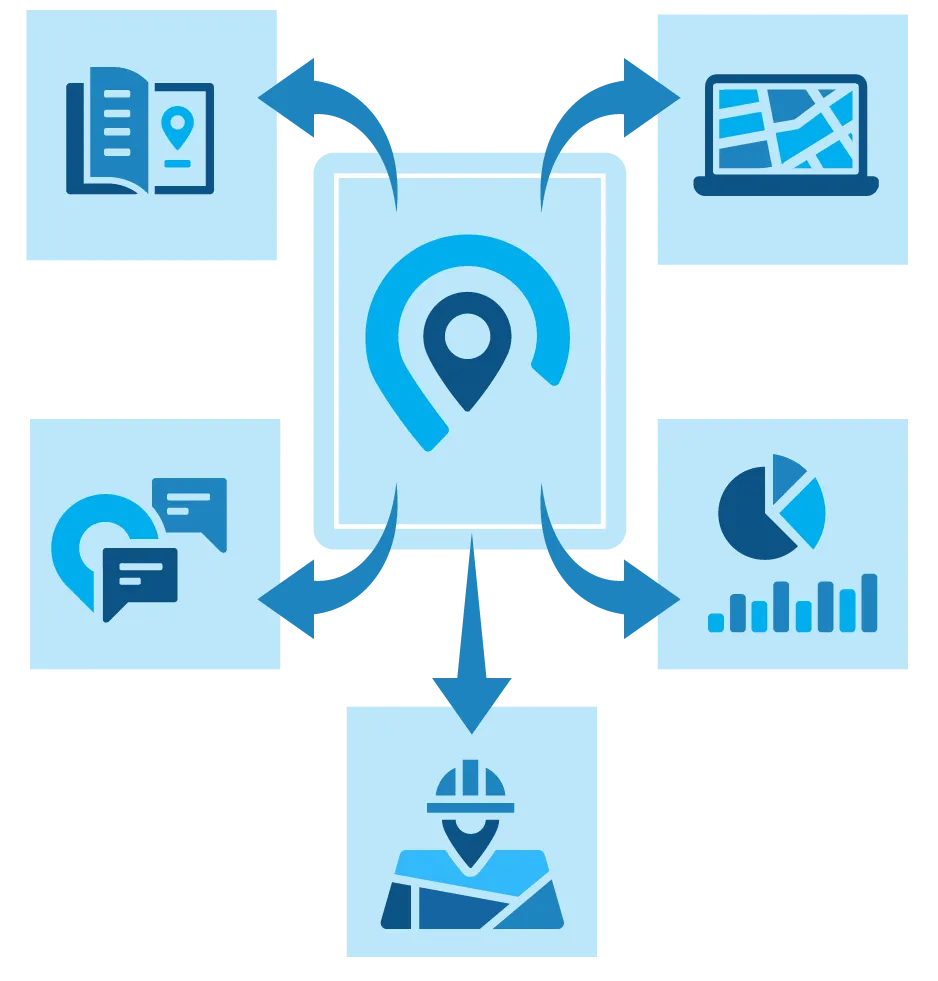
Discover how GeoApps helps your organization with professional GIS solutions.