GML
GML (Geography Markup Language) is the OGC XML standard for modeling and exchanging geographic features with geometry, attributes, CRS, and relationships. It is the native format of many WFS services and INSPIRE datasets in Europe.
GML is hierarchical and schema-driven: complex objects (cadastre, networks, 3D) can be richly modeled. Multiple CRS are explicitly supported. Drawbacks: large files, heavy XML parsing in browsers - hence conversion to GeoJSON in web GIS.
In the Netherlands BGT, BAG, and BRK via PDOK often deliver GML through WFS. GML is not GeoJSON (lighter, JSON) or shapefile (binary, Esri tradition). For interoperability between government systems and GIS packages GML remains the professional standard.
From theory to practice: GeoApps offers user-friendly GIS solutions to get you started right away. Discover how our apps and platforms help you visualize, analyze, and share geographic data.
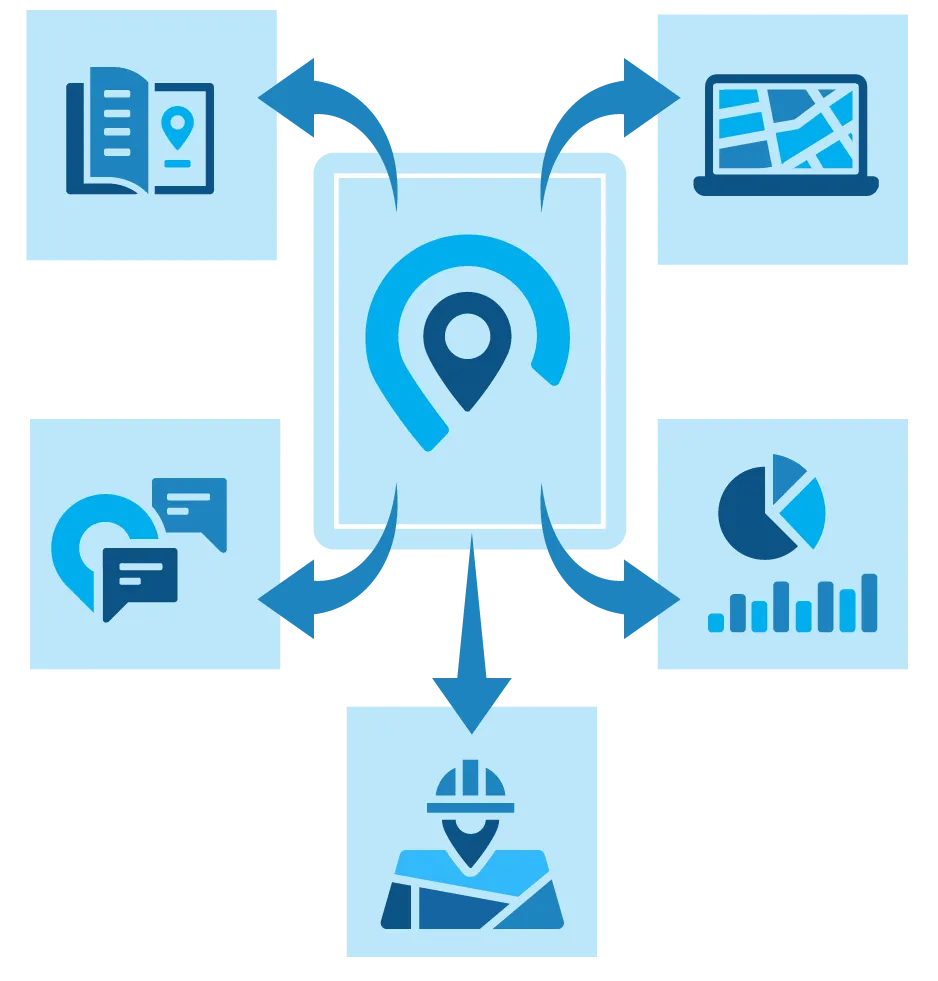
Discover how GeoApps helps your organization with professional GIS solutions.