

154 Responses. Three Designs. One Safer Street.
The Municipality of Hoogeveen used MapTalk to let residents compare three designs for a safer Griendtsveenweg. With 154 responses, local experience became practical input for decisions about crossings, accessibility and street design.
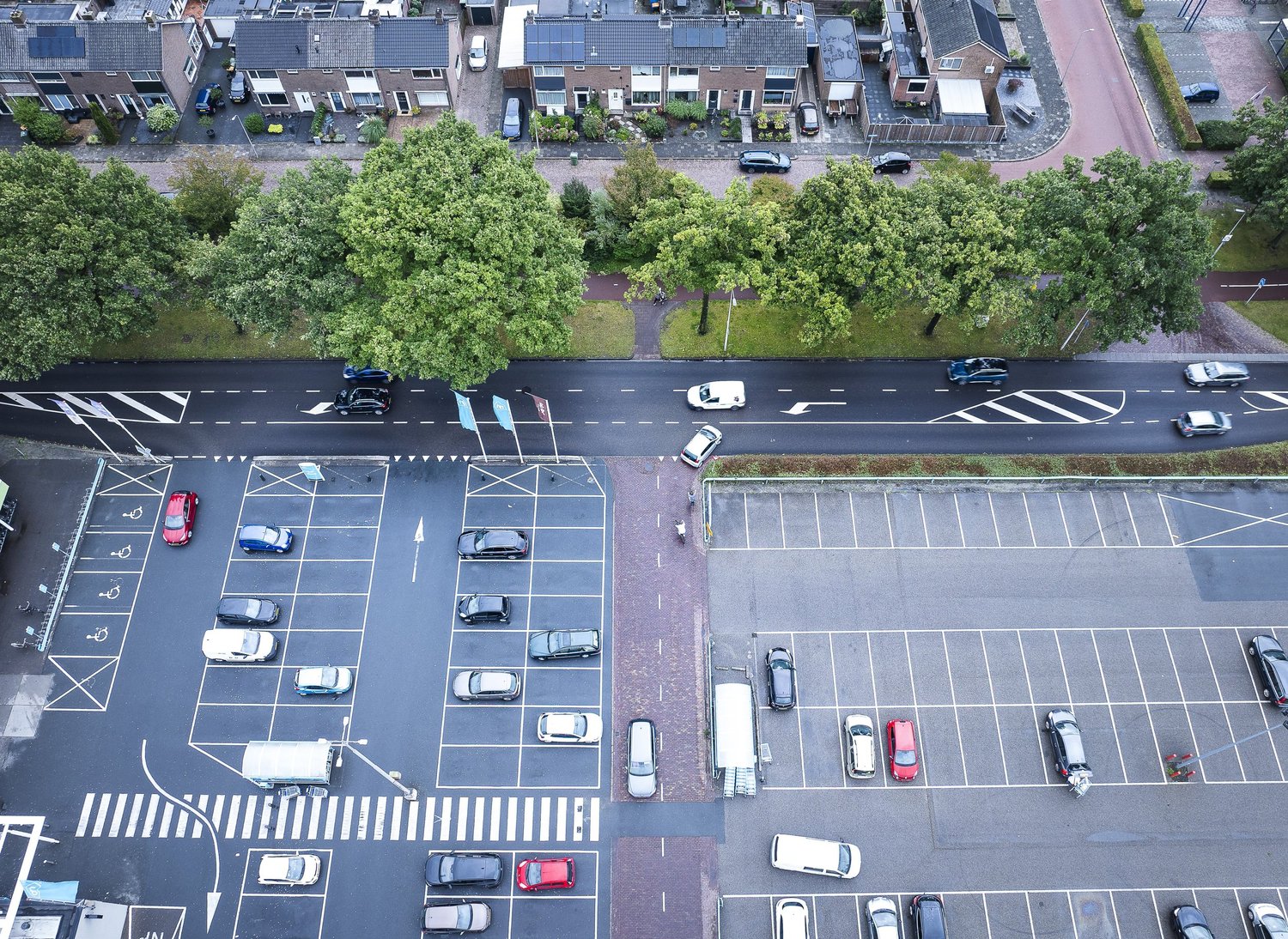
A safer street rarely comes down to one obvious solution. Make the crossing wider and parking may be affected. Redesign more of the street and the project becomes more complex. Keep the intervention small and residents may still feel the underlying problem has not been solved.
That was the challenge on Griendtsveenweg in Hoogeveen, the Netherlands. The municipality wanted to improve traffic safety and accessibility, particularly for pedestrians, cyclists and people with disabilities crossing towards nearby shops. Instead of presenting residents with a finished design, the project used MapTalk to let them compare three possible approaches and explain what mattered to them. The consultation generated 154 responses from local residents.
Three designs looked different on paper. Residents knew what each one would feel like in daily life.
The municipality presented three alternatives. One involved a relatively small adjustment that could be implemented quickly while preserving parking spaces. Another proposed a wider crossing with a central refuge, improving safety but reducing some parking. The third involved a more substantial redesign with additional greenery and more space for cyclists and pedestrians.
Residents were not only asked which design they preferred. They could also explain their reasoning and respond to more specific questions about priority, access to the car park and the possible use of a raised plateau.
That created a much richer conversation than a simple vote. A preferred design tells a project team what someone chooses. Their explanation reveals why, and that is often where the most useful local knowledge begins.
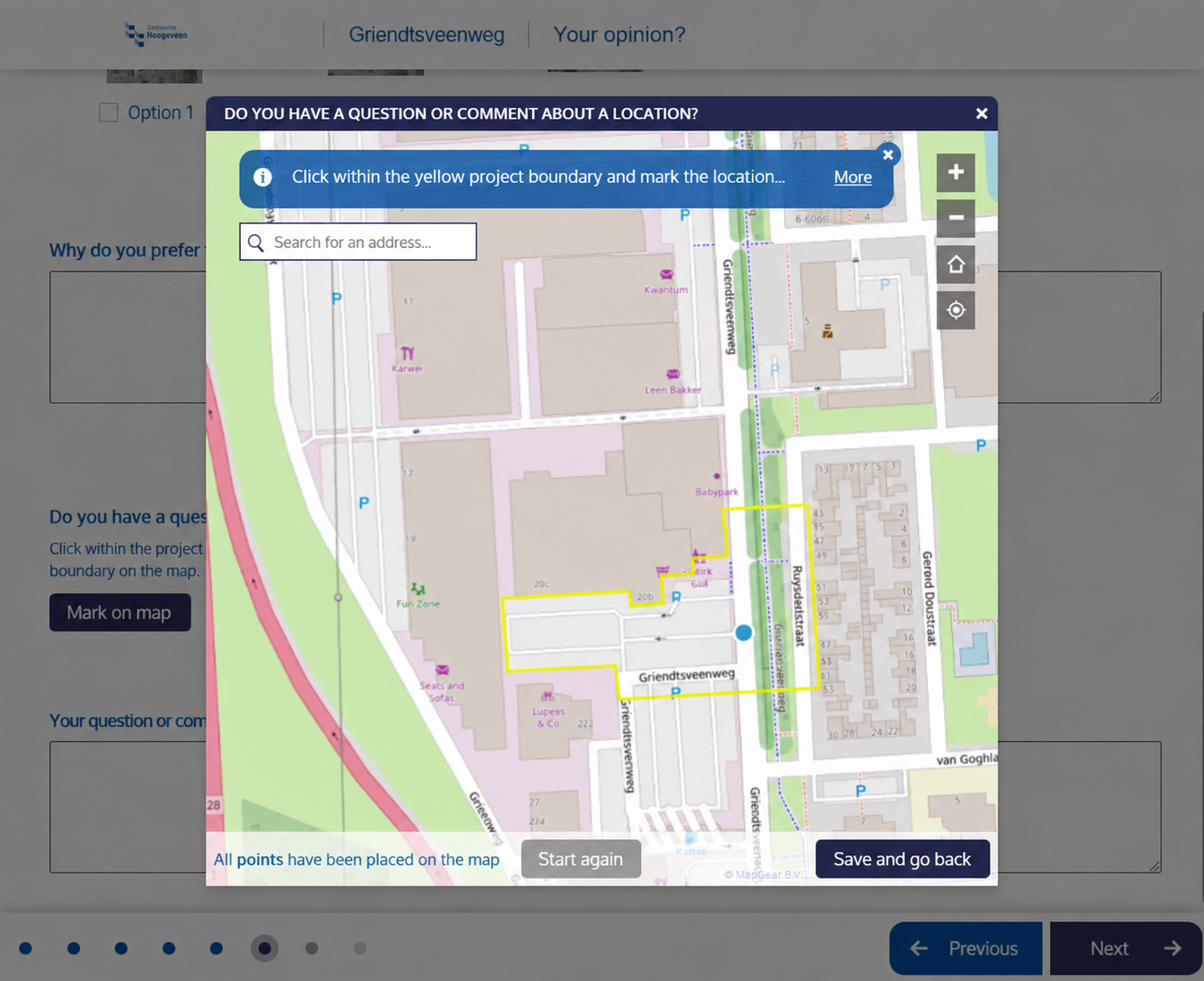
MapTalk interface allowing Hoogeveen residents to comment on specific locations within the Griendtsveenweg traffic safety project
Traffic models show how a street works. Residents show where it stops working for them.
People who use the same street every day notice details that are difficult to capture through technical analysis alone. They know where crossing feels uncomfortable, where visibility becomes difficult and where a design may create problems for someone using a wheelchair, bicycle or mobility aid.
MapTalk allowed those experiences to be connected directly to the project. The municipality could see not only how many people responded, but which concerns appeared repeatedly and what residents considered most important.
Accessibility for people with disabilities emerged several times in the feedback, helping the municipality understand where improvements could have the greatest practical effect.
A safer design is stronger when technical knowledge and everyday experience are allowed to challenge each other.
The most useful participation insight is the one you can use while the decision is still moving.
One of the strongest moments in the project had nothing to do with the final response count. A municipal officer needed an interim overview on the morning of a meeting with an alderman.
Using MapTalk’s export functionality, the project team could generate an overview within minutes, including maps, themes and the main points residents had raised. Those findings could then be discussed in the meeting that same day rather than waiting weeks for a separate participation report.
That is an important distinction. Participation becomes much more valuable when insight reaches project teams while there is still time to use it.
Instead of consultation becoming a report produced after the conversation has ended, resident input can become part of the ongoing design process.
Residents do not need to design the street. They need a clear way to show what matters.
The Hoogeveen project demonstrates that digital participation does not need to turn residents into transport planners. The municipality remained responsible for engineering, feasibility and the final decision, while residents contributed something equally valuable: knowledge of how the street functions in everyday life.
By giving people three understandable options, asking focused questions and connecting the results to a clear spatial context, the municipality created a process that generated 154 usable responses rather than simply collecting general opinions.
The result was a clearer basis for choosing how Griendtsveenweg could become safer and more accessible.
Good participation does not ask residents to solve the entire design problem. It gives them a practical way to show project teams what they should not overlook.
What could your mobility project learn if residents could respond directly to the design?
MapTalk helps municipalities and project teams compare alternatives, collect structured location-based feedback and turn local experience into practical input while plans are still developing.